


Why Your BSC Certification is a Lifeline
In the world of high-stakes science and sterile compounding, your Class II Biosafety Cabinet (BSC) is the thin line between a safe workspace and a hazardous exposure event. But a BSC is only as good as its last certification.
Whether you are managing a research lab or a high-volume pharmacy in the UAE, understanding the standards of NSF/ANSI 49 and USP <797>/<800> isn't just about compliance—it’s about lives.
The Gold Standards: NSF vs. USP
While they often work together, these standards serve two distinct purposes:
- NSF/ANSI 49: This is the "Manufacturer’s Bible." It ensures the cabinet is designed and functioning to protect the user, the product, and the environment. Most labs require this check annually.
- USP <797> & <800>: These are clinical standards for pharmacies. Because sterile compounding carries a higher risk of patient infection or technician exposure to hazardous drugs, these standards mandate recertification every six months.
What Really Happens During Certification?
When an accredited field certifier arrives, they aren’t just looking at the lights. They perform a "stress test" on the unit’s physics:
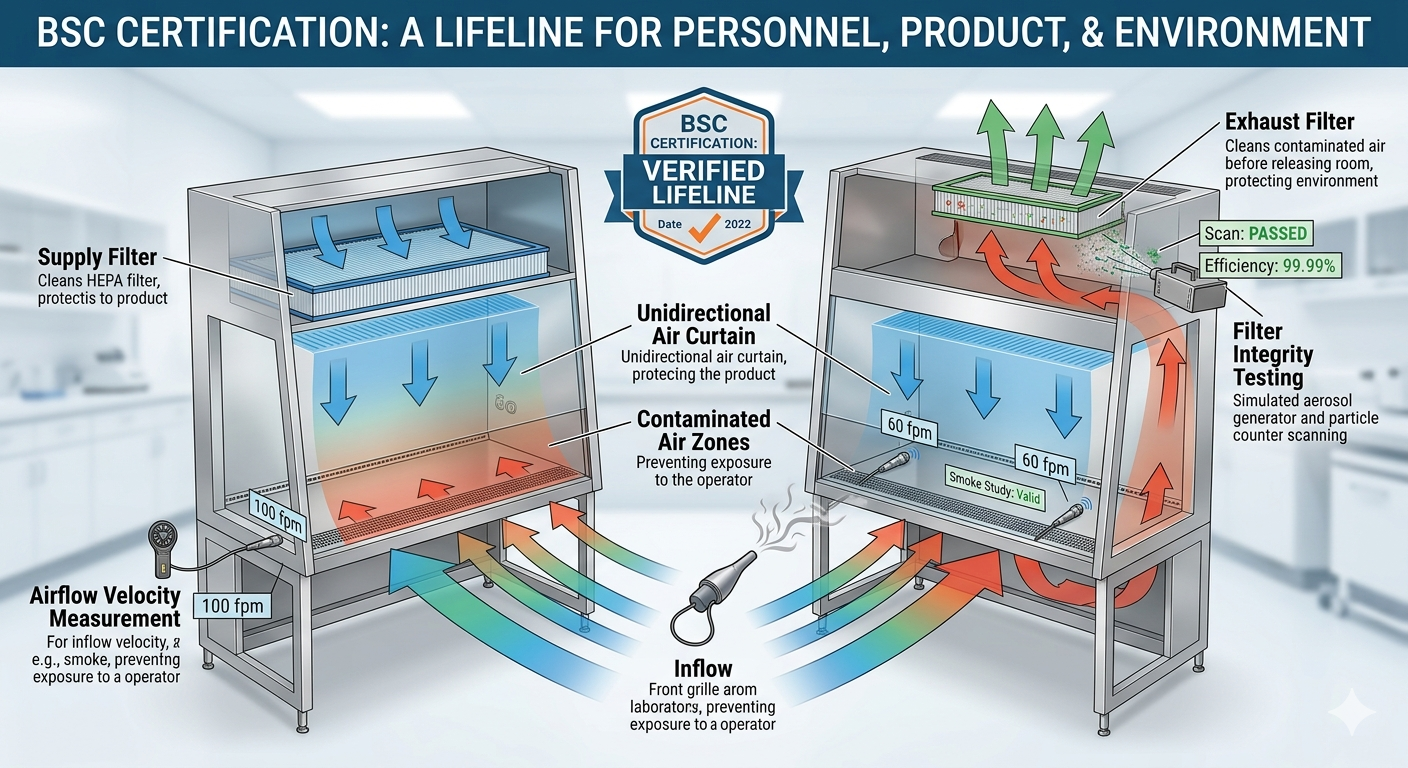
- The Invisible Shield (Airflow Velocity): They measure the speed of air entering the front (Inflow) and the air bathing your samples (Downflow). If these are off by even a few feet per minute, the protective "air curtain" can break.
- The Smoke Test (Visualization): Using non-toxic smoke, technicians visually confirm that air stays where it belongs. There should be no "lazy" air or turbulence escaping the sash.
- HEPA Integrity: Using aerosolized particles, they scan every inch of the filter. Even a pinhole leak can allow biohazards to bypass the system entirely.
When Should You Call a Professional?
Routine checks are vital, but you must also schedule a recertification if:
- You’ve relocated the unit (even just across the room).
- You’ve replaced a HEPA filter or a motor.
- The unit has undergone major repairs.
- You notice any alarms or changes in the sound of the airflow.