

1. Field Instrument Setup
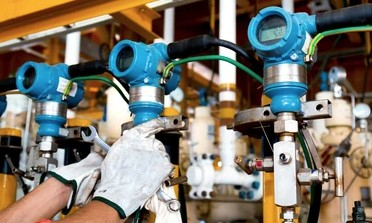
Transmitters
Mount and calibrate smart transmitters for Pressure, Temperature, Flow, and Level using HART or Foundation Fieldbus communicators.
Switches & Gauges
Mechanically install local indicators and safety switches (e.g., high-pressure cut-offs) to enable manual overrides and local monitoring.
2. SS Tubing & Impulse Lines
Fabrication
Precisely bend stainless steel tubing to connect process lines to transmitters.
Integrity
Ensure leak-proof connections using dual-ferrule compression fittings (e.g., Swagelok or Parker).
Perform pressure tests to verify system integrity.
3. Infrastructure & Routing
Cable Trays
Install perforated or ladder-type trays to route signal (4-20mA) and power cables.
Maintain proper separation to prevent electromagnetic interference (EMI).
Glanding
Ensure proper cable entry into junction boxes to maintain ingress protection (IP) ratings.
4. Hazardous Area (Ex d) Setup
Explosion-Proof (Ex d)
Install flameproof enclosures designed to contain internal explosions and prevent ignition of the external atmosphere.
Compliance
Strictly adhere to ATEX or IECEx standards.
Use certified compound glands and maintain clean, unobstructed flame paths.
5. Commissioning (Hot & Cold)
Loop Checking
Verify signals from field instruments to PLC/DCS HMI for accuracy and continuity.
Function Testing
Simulate process conditions to confirm that logic functions such as trips and alarms operate as intended.
Calibration & Loop Checking
Perform ISO/IEC 17025 accredited calibrations on-site using mobile test benches.
Conduct end-to-end loop integrity checks to ensure accurate, real-time signal transmission with zero communication lag.
6. System Integration (DCS/PLC/SCADA)
Perform onsite assembly and Site Acceptance Testing (SAT) of automation architectures.
Ensure seamless integration between field hardware and DCS, SCADA, or PLC systems for real-time data visualization.
Communication Protocols
Configure Modbus, Profibus, or Ethernet/IP to ensure communication compatibility between field instruments and control systems.
HMI/SCADA Visualization
Map tags so 4-20mA signals (e.g., from pressure transmitters) accurately display process values (e.g., "0-100 psi") on operator screens.
Logic Verification
Test PID loops and interlocks to ensure correct system responses, such as shutting down pumps when a "High-Level" switch trips.
Network Integrity
Validate fiber optic or copper backbones to guarantee zero data loss across the automation network.
7. Shutdown & Turnaround (TAR) Support
Provide skilled I&C manpower for planned outages, handling high-volume calibration, critical instrument upgrades, and rapid-response repairs.
Manage mobilization and logistics to support 24/7 shifts, ensuring all test equipment (calibrators, HART communicators) is certified and ready.
Calibration Strategy
Combine shop (bench) calibration for critical valves and transmitters with "in-situ" field checks to meet tight schedule windows.
Critical Path Management
Identify long-lead instrument upgrades (e.g., replacing Rosemount manifolds or PLC racks) to prevent restart delays.
Safety in Congested Areas
Coordinate I&C work alongside mechanical and piping teams, particularly in confined spaces or during vessel inspections at heights.
8. Life-Safety Hardware Maintenance
Fire & Gas (F&G) Detection
Conduct routine inspection and testing of detectors (flame, gas, smoke) to ensure proper sensitivity and alarm response.
Follow typical 6–12 month calibration cycles based on environmental conditions.
Emergency Shutdown (ESD) Loops
Perform proof testing of the entire safety loop—from sensor to logic solver to final element (e.g., ESD valve)—to uncover hidden failures.
Verify Safety Integrity Level (SIL) compliance to ensure risk-reduction targets are met.
Pressure Relief Valve (PRV) / Pressure Safety Valve (PSV) Recertification
Conduct comprehensive overhauls every 3 to 5 years, with more frequent checks for high-risk services.
Include "pre-pop" tests to verify set points and seat tightness inspections to prevent leaks.